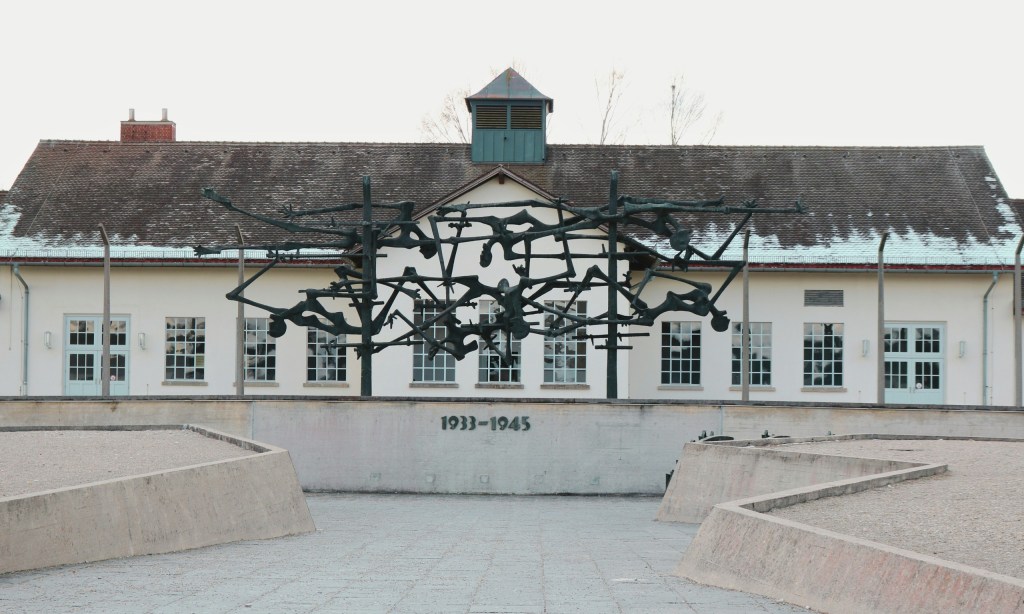
Private Dachau Memorial Tour from Munich
Some journeys are not about sightseeing. They are about bearing witness.
Dachau Concentration Camp Memorial Site — 16 kilometers northwest of Munich — is one of the most important historical sites in Europe. It is not a tourist attraction in the conventional sense. It is a place of remembrance, education, and moral reckoning. Getting there matters. Arriving prepared matters. Having an expert companion at your side, who can provide context, answer questions, and hold space for the weight of what you are about to experience — matters more than almost anything else.
Chauffeurservice Munich offers a Private Dachau Concentration Camp Tour from Munich with a dedicated personal driver-guide, designed for individuals, families, educational groups, and VIP travelers who want to approach this site with the seriousness, depth, and dignity it demands. This is not a group bus tour. It is a Private Tour from Munich to Dachau Concentration Camp — with door-to-door hotel pickup, a multilingual expert at your side throughout, and the time and space to experience the memorial at a pace that allows genuine understanding.
If you are looking to hire a private driver for a Dachau Concentration Camp tour from Munich — one that includes professional historical guidance, complimentary beverages, full-comfort Mercedes-Benz transport, and a flexible schedule from 6 to 8 hours — you have found the right service.
The Dachau Memorial Site is freely accessible and open daily from 09:00 to 17:00. Public transport from Munich Central Station takes approximately 45 minutes by S-Bahn and bus. Guided group tours depart from central Munich meeting points and carry up to 30 or more visitors at a time.
None of this is wrong. But none of it is right for every visitor — and for many, it is right for almost no one.
A Private Driver-Guide Tour from Munich to Dachau changes the experience fundamentally. Your expert arrives at your hotel. The journey south through the Bavarian landscape becomes an introduction — context about Munich’s role in the rise of National Socialism, the significance of Dachau as the first and model concentration camp of the Third Reich, and what you are about to see. You arrive at the memorial prepared, not disoriented.
Inside the site, your driver-guide remains at your side — not herding a group of thirty strangers, but attending exclusively to you and your party. Questions are answered in real time. Difficult subjects are addressed with historical precision and human sensitivity. If someone in your group needs a moment, you take a moment. The day adapts to you — not to a timetable.
For families bringing teenagers, for Jewish visitors making a deeply personal pilgrimage, for educators seeking curricular depth, for corporate groups engaged in leadership reflection programs — the private format is not a luxury. It is a necessity.
The Dachau Concentration Camp Memorial Site covers the full grounds of the former camp, preserved and restored with the explicit goal expressed by its founders: “Never Again.” A visit takes a minimum of two hours to do justice to the main exhibition alone; with the crematorium, the barracks, the religious memorials, and the grounds, most visitors find that three to four hours at the site is appropriate. Your Chauffeurservice Munich driver-guide ensures that every minute is purposeful.
The Entrance Gate — “Arbeit Macht Frei” The wrought-iron inscription over the main gate — “Work Sets You Free” — was the cynical welcome extended to prisoners at Dachau and, subsequently, at Auschwitz and other camps. Your driver-guide explains its origin and meaning in the context of Nazi ideology.
The Appellplatz — Roll Call Square The vast gravel expanse at the center of the camp where prisoners were assembled twice daily, sometimes for hours in extremes of weather, to be counted. The scale of the square communicates the scale of the operation in a way no photograph can.
The Prisoner Barracks Originally 34 barracks housed prisoners in conditions of severe overcrowding. Two have been reconstructed to their original state. The original footprint markers of the remaining 32 run in two long rows across the camp grounds — a haunting geometry of absence.
The Museum — “Path of the Prisoners” Six sections across 13 rooms in the former Maintenance Building document the full history of Dachau from 1933 to 1945: arrival, registration, forced labor, medical experiments, death, and liberation. Survivor testimonies, original documents, photographs, and personal artifacts. Admission free.
The Camp Prison — “The Bunker” The former camp prison where prominent prisoners, clergy, political figures, and those subjected to punishment were held in individual cells. Among those imprisoned here: Pastor Martin Niemöller, the British secret agent Sigismund Payne Best, and Crown Prince Friedrich Leopold of Prussia.
The Crematorium Area — Barrack X The most solemn area of the site. The original crematorium (1940) and the larger Barrack X (1942) with four furnaces, the disinfection chambers, and the gas chamber preserved in its original state. The gas chamber at Dachau is documented to have been used on at least one occasion; historians continue to research its full use. Photography inside is discouraged out of respect for the victims.
The Religious Memorials Several places of prayer and remembrance erected after liberation: the Jewish Memorial with its deeply symbolic descending architecture and menorah of light; the Catholic “Mortal Agony of Christ” Chapel; the Protestant Church of Reconciliation; and the Russian Orthodox Chapel. A Carmelite convent established on the grounds in 1964 maintains a permanent contemplative presence.
The “Path of Death” A woodland path beyond the crematorium marking execution sites and mass graves with plaques and markers. A place for quiet reflection before departure.
Optional: Dachau Altstadt The historic town of Dachau — beloved by artists including Max Liebermann and Lovis Corinth before the Nazi period — has a charming old town center, a panoramic terrace above the River Amper, and a quiet residential character entirely distinct from the memorial site. A brief visit offers perspective and a gentle close to a demanding day.
The following is a representative full-day schedule. All elements are fully adjustable.
08:30 AM — Hotel or private address pickup in Munich in your flagship Mercedes-Benz vehicle; driver-guide begins historical introduction to Munich as the birthplace of National Socialism and the road to Dachau
09:00 AM — Arrival at Dachau Memorial Site as it opens; avoid the first group tour arrivals
09:10 AM — Entrance Gate and Appellplatz: first orientation with driver-guide; overview of the camp layout, history, and the significance of Dachau as the model for all subsequent camps
09:30 AM — Museum in the former Maintenance Building: “Path of the Prisoners” permanent exhibition; six sections, 13 rooms; survivor testimonies, documents, photographs, and artifacts from 1933 to 1945
11:00 AM — Reconstructed prisoner barracks: daily life, conditions, forced labor; the former camp prison (the Bunker) and its prominent inmates
11:45 AM — Crematorium area: the original crematorium, Barrack X, the gas chamber; a moment for silence and reflection
12:30 PM — Religious memorials and the Path of Death; the Jewish Memorial, the Catholic and Protestant chapels, the Russian Orthodox Chapel
13:15 PM — Optional: brief visit to Dachau Altstadt and panoramic terrace above the River Amper
14:00 PM — Departure for Munich
14:30 – 15:00 PM — Door-to-door drop-off at your Munich hotel or private address
Every stop can be extended, condensed, or replaced. Your driver-guide follows your lead throughout.
- Door-to-door hotel or private address pickup and drop-off in Munich at your chosen time
- Flagship Mercedes-Benz fleet: S-Class (1–3 guests); V-Class AMG Line (up to 6); Sprinter VIP Edition (up to 19) — all with full leather VIP interiors
- Complimentary premium beverages from the onboard minibar throughout the day
- Premium snacks: curated selection
- Complimentary high-speed Wi-Fi onboard
- Multilingual driver-guide: English, German, French, Italian, Spanish, Portuguese (subject to availability)
- All parking fees and road tolls included
- Memorial Site entry: free of charge (no ticket required)
- Audio guides at the site arrangeable on request
- Optional Dachau Altstadt visit and optional Munich city tour combination
- Fully flexible, privately configured itinerary — your pace, your questions, your experience


Your Questions, Answered
Dachau was the first concentration camp established by the Nazi regime. It was opened on March 22, 1933 — just 51 days after Hitler became Chancellor of Germany — on the orders of Heinrich Himmler, then Police President of Munich. Initially designed to hold political prisoners, Dachau became the organizational and operational model for all subsequent concentration camps in the Third Reich: its layout, administrative structure, and system of prisoner control were replicated across Nazi-occupied Europe. Over its twelve years of operation from 1933 to 1945, more than 200,000 prisoners from across Europe were imprisoned at Dachau; at least 41,500 documented deaths occurred there. On April 29, 1945, American soldiers of the 45th Infantry Division liberated the camp. The Dachau Memorial Site was established in 1965 on the initiative of former prisoners and is today one of the most visited and historically important memorial sites in Germany.
Every Chauffeurservice Munich Private Dachau Tour from Munich includes door-to-door hotel or private address pickup and drop-off in Munich; a dedicated multilingual driver-guide for the entire day; complimentary premium beverages from the onboard minibar; premium snacks; complimentary high-speed Wi-Fi; all parking fees and road tolls; and a fully flexible, privately configured itinerary. Entry to the Dachau Memorial Site is free of charge. Audio guides at the site can be arranged on request. An optional visit to the historic town of Dachau, with its charming Altstadt and panoramic terrace above the River Amper, can be incorporated depending on your group’s schedule and wishes.
The full experience runs approximately 6 to 8 hours, depending on the depth of your visit at the memorial and any optional additions. Departure is at approximately 09:00 AM from your Munich hotel — timed to arrive at the site when it opens at 09:00 and before the first group tours arrive. Return to Munich is in the early to mid-afternoon. A half-day format of approximately 4 to 5 hours is also available for guests with time constraints.
The memorial encompasses the full grounds of the former concentration camp. Key sites include: the main entrance gate with the infamous wrought-iron inscription “Arbeit Macht Frei”; the Appellplatz (Roll Call Square) where prisoners stood for hours in all weather; the restored and reconstructed prisoner barracks documenting daily life under captivity; the Museum in the former Maintenance Building with six sections covering the camp’s history from 1933 to 1945 through documents, photographs, survivor testimonies, and artifacts; the former camp prison (the “Bunker”) where prominent prisoners and those subjected to punishment were held; the crematorium area, including the original crematorium and Barrack X with its four furnaces and the preserved gas chamber; the memorial monuments and religious chapels erected after the war, including the Jewish Memorial, the Catholic Mortal Agony of Christ Chapel, the Protestant Church of Reconciliation, and the Russian Orthodox Chapel; and the “Path of Death” beyond the crematorium, winding through a small forest where grave markers and plaques commemorate execution sites. Your driver-guide provides informed, sensitive, and historically rigorous context throughout.
The Dachau Memorial Site is widely recommended for visitors aged 14 and above. For families with teenagers, a private tour format is strongly preferable to a group tour: the driver-guide can calibrate the level of historical detail and emotional directness to the ages and maturity of those present, and the pace of the visit can be adjusted accordingly. The memorial itself does not use graphic imagery in its outdoor areas. The crematorium and gas chamber can be visited or bypassed depending on your group’s preferences. Please discuss your group’s composition with us at time of booking.
Driver-guides are available in English, German, French, Italian, Spanish, and Portuguese, subject to availability at time of booking. Please specify your preferred language when making your reservation. Historical commentary on the Munich origins of National Socialism, the rise of the Third Reich, and the specific history of Dachau is delivered throughout the journey and at the memorial site.
Yes. A morning or afternoon Munich city tour — covering the historic Altstadt, Marienplatz, the Residenz, the Hofbraeuhaus, and the key sites of the Nazi rise to power in Munich — can be incorporated before or after the Dachau visit as part of a full-day private program. Munich was the “Capital of the Movement” (Hauptstadt der Bewegung) — the birthplace of National Socialism — and understanding the city adds essential context to the Dachau experience. Please enquire at time of booking.
Chauffeurservice Munich operates flagship Mercedes-Benz vehicles for all group sizes from 2 to 20 guests: the Mercedes-Benz S-Class saloon for 1 to 3 guests; the Mercedes-Benz V-Class AMG Line for families and groups up to 6; the Mercedes-Benz Sprinter VIP Edition for larger groups up to 19. All vehicles feature full leather interiors, onboard minibar, complimentary beverages, premium snacks, high-speed Wi-Fi, and individual climate control.
Starting At
$1,349.79
Private Eagles Nest Tour from Munich
10 Stunden
Discover the historical significance of Obersalzberg as you explore its Documentation Center, revealing insights into National Socialism. Ascend to Eagle’s Nest, where panoramic views stretch over alpine peaks and valleys. Visit remnants of Hitler’s Berghof residence and traverse the scenic Roßfeld-Panoramastraße for sweeping vistas. Enhance your journey with optional
Starting At
$1,349.79
Private Salzburg & Sound of Music Tour
10 Stunden
Explore Salzburg’s Old Town, a UNESCO World Heritage site, where baroque architecture and musical history converge. Visit Mozart’s birthplace on Getreidegasse and admire the imposing Hohensalzburg Fortress overlooking the city. Stroll through Mirabell Gardens, where “The Sound of Music” scenes were filmed, capturing iconic views of Pegasus Fountain