April 1st is one of the loudest mornings of the year at Dana Wharf. The gates open early, the parking lot fills up, the gear shop is moving like a Black Friday line, and every boat going out is loaded with anglers who have been waiting all winter for the same thing: the rockfish opener.
By dinnertime, the back deck of the New San Mateo is a wall of red. Vermilions and bocaccio stacked in the buckets. Sculpin lined up on the rail. A couple of lingcod with their jaws hanging open. That’s rockfish season in California, and from April through the end of summer, it’s some of the most consistent action you can find on a sportfishing boat anywhere on the coast.
If you’ve never targeted rockfish out of Dana Point before, this is the guide for how it actually works. Season dates, what you’ll catch, how deep we go, what gear earns its keep, and which trip to book.
When Is Rockfish Season in California?
For 2026, the boat-based rockfish season in Southern California runs April 1 through December 31, open at all depths the whole way:
- April 1 to December 31: Open at all depths. You can fish the shallow hard bottom up against the coast or run out to 400, 500, 600 feet of water and beyond for the deep-water reds. No mid-season depth cutoff this year.
- January 1 through March 31: Closed. No take, no possession on board.
One thing to know before you bank on those dates: California sets the rockfish rules fresh every year. The open and close dates, the depth limits, and the bag limits are all decided annually by CDFW and can change from one season to the next, sometimes by management area. Always check the current CDFW regulations before you book or fish. For the official table, check the CDFW Southern Management Area summary before every trip.
What Rockfish Will You Catch Off Dana Point?
The hard bottom off Dana Point is a rockfish factory. There’s enough reef structure between the coast and San Clemente Island to keep a fleet busy all season. Here’s what’s actually coming up in the buckets right now:
- Vermilion rockfish, the bright red fish people call “reds” or “red snapper” out here. Two-fish sub-limit per angler. These are the prize.
- Bocaccio, long and slender with a big mouth. Easy to catch a limit of these on a good day in the deep water.
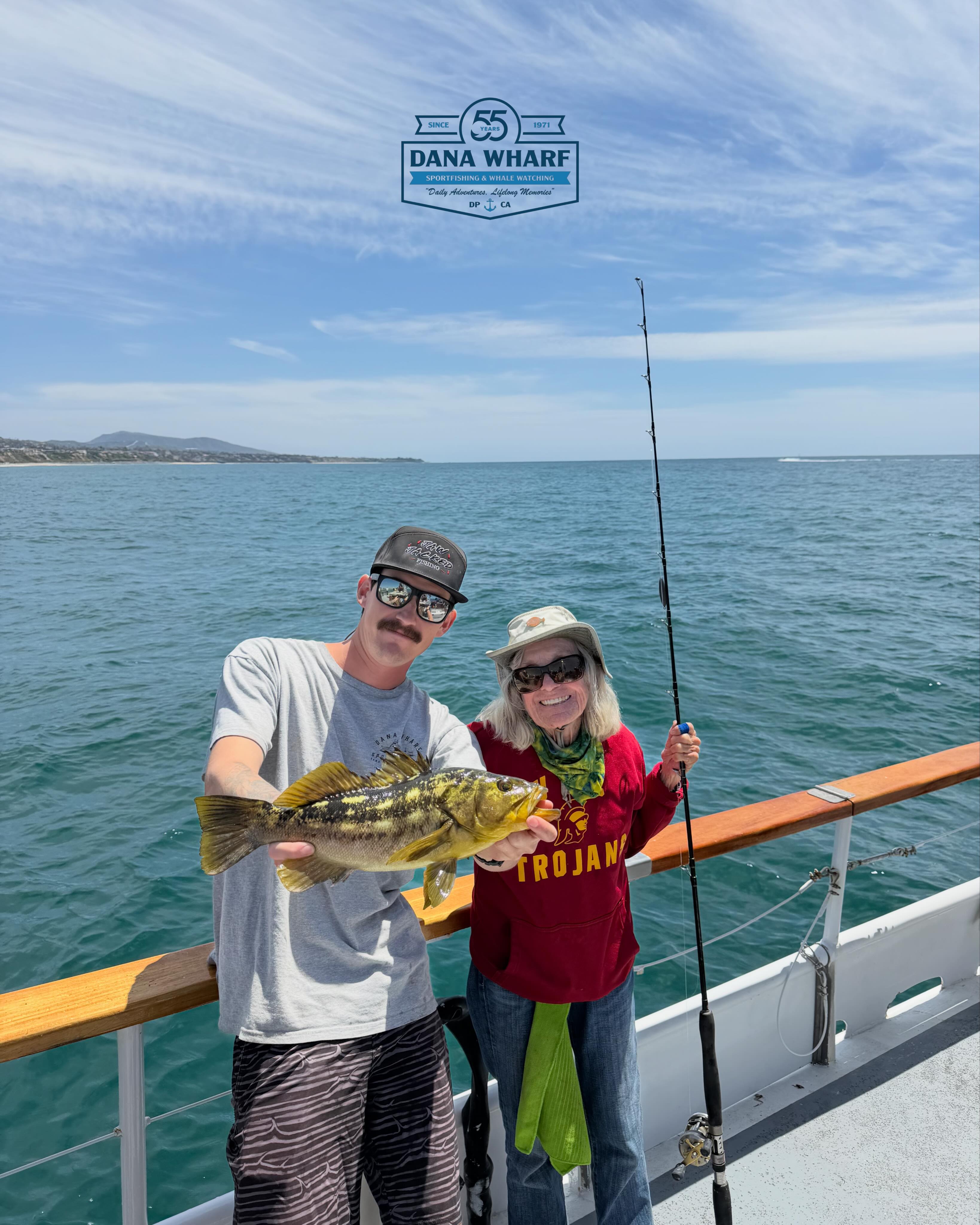
- Copper rockfish, a one-fish-per-angler species. They’re a beautiful trophy when you put one in the bag.
- Flag rockfish and starry rockfish, the colorful ones, mostly deep-water fish.
- Speckled rockfish, more of a inshore fish in the 200-300 foot zone.
- California scorpionfish (sculpin), a year-round bonus species with their own season. Wide-open bites on these are common all summer.
- Lingcod, technically not a rockfish but rides on the same trips. Two per person, 22-inch minimum. We have a full breakdown of how to target lingcod with a dropper-loop “hitchhiker” rig.
- Sheephead, ocean whitefish, mixed bass. Standard side-catch on a rockfish trip. The ocean whitefish bite in particular can save a day when the reds are scattered.
Quillback and yelloweye rockfish are zero-retention in California. If one comes up, it goes right back down on the descending device. More on that in a minute.
How Deep Are You Actually Fishing?
People hear “rockfish” and picture standing on a rail dropping 800 feet of line, but the reality is more nuanced.
The deep-water trips work the 300 to 600 foot range. That’s where the big vermilions, bocaccio, and the colorful starry and flag rockfish live. You’re fishing electric reels or heavy conventional gear, slow-pitch jigs or torpedo sinkers with bait. The captains run out to known reef edges and pinnacles and stay on them.
In summer, a lot of the fleet pivots in to the hard bottom inside the 50 fathom line. That’s where most of the summer action happens for half-day and 3/4 day trips out of Dana Wharf. Plenty of rockfish live in 100 to 280 feet of water, plus you pick up scorpionfish, sheephead, ocean whitefish, and mixed bass on the same drops. Lighter gear, faster bites, less downtime between fish. With all-depths open through the end of the year in 2026, the deep reds are still on the table when you want them.
If you want the trophy red, you book a deep-water trip. If you want a fun mixed bag with steady action, the inshore summer bite is the move.
What Gear Do You Need?
If you’re stepping aboard a Dana Wharf boat with no gear of your own, the office rents rods and reels rigged for what we’re targeting that day. You can show up with empty hands and still catch fish. But if you want to bring your own setup, here’s what works on our boats:
- For the deep stuff: 7- to 8-foot medium-heavy conventional rod, a reel that holds 600 feet of 50-pound braid, a 30 to 40-pound fluoro leader, and 6 to 16-ounce torpedo sinkers depending on current. Slow-pitch jigs (200-300 grams) in glow and chrome have been on fire.
- For the inshore summer fishing: A medium 7-foot rod, 30-pound braid, 25-pound fluoro leader, 4 to 8-ounce dropper loops, and either live squid or cut squid strips. Lead-head jigs with curly tails also produce, especially on bigger reds. Same principles we cover in our leadhead breakdown for winter bass.
- Bait: Live squid is gold when we have it. Cut mackerel, sardines, and squid strips all work. The boat carries it; you don’t need to chase it down.
The crew will retie, change weights, and unhook fish for you all day. Nobody on the boat cares if it’s your first time. The whole reason we run open-party trips is so anglers at every level can get into fish.
How Many Rockfish Can You Keep?
The 2026 daily bag limit for the RCG (Rockfish, Cabezon, Greenlings) complex in the Southern Management Area is 10 fish per angler in combination. Inside that 10-fish bag, there are sub-limits to know:
- Copper rockfish: 1 fish per angler
- Vermilion and sunset rockfish (combined): 2 fish per angler
- Canary rockfish: 2 fish per angler
- Quillback and yelloweye rockfish: 0. No retention at any time.
- Lingcod: 2 fish per angler, 22-inch minimum, counted separately from the 10-fish RCG limit.
The crew tracks your bag at the rail. If you hit your sub-limit on vermilions early, anything red after that is going back. That’s how we keep the fishery healthy and how we keep coming back to the same spots year after year with the same kind of action.
Do You Need a Descending Device?
Yes. By California law, every boat targeting rockfish or with rockfish on board has to have a working descending device available. It’s a small clip-on tool that takes fish suffering from barotrauma (the bloated swim bladder you see on deep-water fish brought up too fast) back down to depth where the pressure releases and they can swim off.
You don’t need to buy one for an open-party trip. The Dana Wharf boats all carry them and the deckhands use them on every protected release. But if you fish your own boat out here, you’re required to have one rigged and ready. They run $15 to $60 and they’re at every tackle shop in the harbor.
Which Dana Wharf Trip Is Best for Rockfish?
We run different trips depending on the season and the target:
- 3/4 day trips are the workhorse of rockfish season. Leave around 6 a.m., back at the dock by 3:30 p.m., big enough range to hit the productive reefs. This is the right trip for first-timers and for anyone who wants a good shot at a limit without an overnight.
- Overnight trips on the New San Mateo or the Fury are the move when you want to fish the deep water at all depths. You leave at 8 p.m., wake up on the fishing grounds at first light, and fish the deep water all day. This is how you get on the trophy reds and the bocaccio of a lifetime.
- Half day trips work well for the summer inshore bite, especially with families or anyone short on time. You’re targeting sculpin, mixed bass, and the closer-in rockfish in 100-200 feet of water. The 1/2 Price Tuesday trips are the best deal in the harbor when conditions line up.
- Private charters on The Current or one of our other charter boats are great if you’ve got a group of 6 and want to fish the spots and species you want without sharing the rail. Check the charters page for the boats and rates.
The full schedule, prices, and the fish count updated daily are all on the site. The fish count is the single best way to see what’s actually biting this week before you book.
Planning a Trip This Season
Rockfish is one of those fisheries where the timing matters and the local knowledge matters. We’ve been running these reefs since 1971. The captains know which pinnacle is holding fish this week, what depth the bigger reds have moved to, when to switch from the slow-pitch jig to the dropper loop, and how to position the boat so 20 anglers can all get drops in clean.
If you’re putting a trip together for late spring or summer, all depths are open through the end of 2026 and the deep-water reds are biting hard right now. Browse our full sportfishing schedule, find the trip that fits, and we’ll see you on the rail.