People ask us this one on the boat all the time. They are planning a California trip, they know they want to see whales, and they have narrowed it down to two spots on the map: Santa Barbara up north, and Dana Point down here in south Orange County. Both are real whale country. Both are the kind of place where a blue whale, the largest animal that has ever lived, can surface a few hundred yards off the bow in summer. So which one should you actually book?
We are going to give you a straight answer, but first the honest part: the Santa Barbara Channel is a genuine world-class stretch of water. It is a summer feeding ground for blue whales, and in 2023 it earned a Whale Heritage Site designation from the World Cetacean Alliance. That is not marketing fluff, that is a real credential. There are only two of those designations in the entire United States. The other one is right here in Dana Point, and we got ours first.
After thousands of trips out of Dana Point Harbor, here is how we would break the decision down for anyone weighing the two.
What Do You Actually See in Each Place?
Start with the animals, because that is what you are paying for. The good news is that both destinations share a lot of the same cast. The Santa Barbara Channel and the waters off Dana Point both sit along the same migratory highway, so the big rorquals move through both.
In summer, both spots are blue whale and humpback territory. The Santa Barbara Channel pulls blue whales in from roughly mid-May through mid-September, when upwelling loads the water with krill. Off Dana Point we see the exact same thing on the same calendar, plus fin whales, minke whales, and the occasional Bryde’s whale. In winter, both stretches of coast host gray whales on their round-trip migration between the Arctic and the lagoons of Baja, a journey of roughly 10,000 to 12,000 miles that is one of the longest of any mammal on Earth. If you want the full month-by-month rundown of what shows up here and when, we keep a running seasonal guide to whale watching in Dana Point.
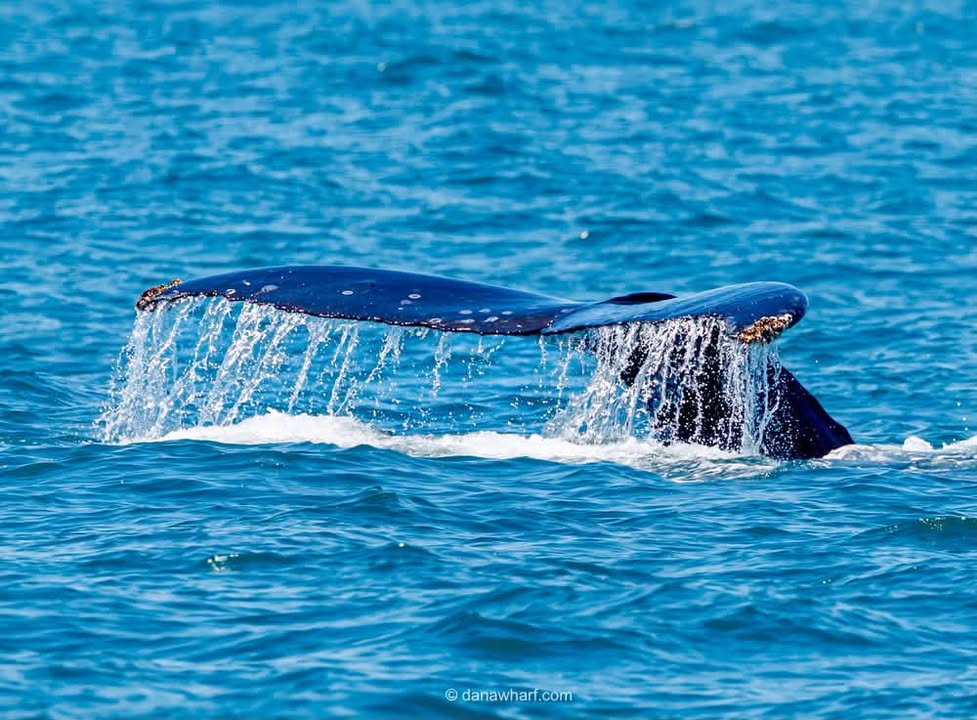
So on the raw species list, it is close to a wash. The difference is not what swims past. It is how easy it is to get to them, how reliably they show, and what else you get on the same ticket. That is where the two spots start to separate.
How Far Do You Have to Travel to the Whales?
This is the part that surprises people, and it is the single biggest reason we tell folks to come see us.
Dana Point sits right on the edge of an underwater canyon. That canyon plunges deep just a short run outside the harbor mouth, and it drives a constant churn of cold, nutrient-rich water toward the surface. That upwelling is a dinner bell. It concentrates krill and baitfish close to shore, which means the whales come close to shore too. We regularly find big baleen whales less than three miles from the harbor. Some mornings we are barely out of the no-wake zone before the first spout goes up.
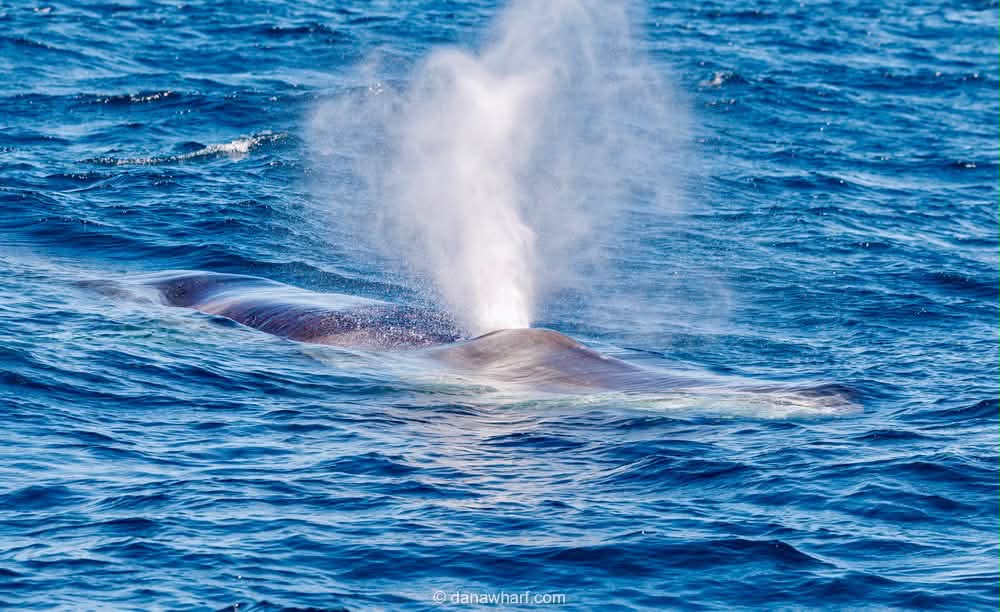
Up in the Santa Barbara Channel, the best blue whale action is often out along the island drop-offs, which means a longer run across open water to reach the feeding zones. That is why so many Channel trips run in the two-and-a-half to four-and-a-half hour range. It is a beautiful ride and the islands are stunning, but a bigger share of your day gets spent getting there and back. If your crew includes kids, grandparents, or anyone who would rather not spend hours crossing open ocean, that shorter Dana Point run is a real advantage. Less transit, more whale.
What About the Dolphins?
Here is where Dana Point stops being “as good as” and starts being in a category of its own.
The same canyon and upwelling that pull in whales also make this one of the densest dolphin habitats on the planet. The waters off Dana Point are often cited as holding more dolphins per square mile than almost anywhere else on Earth, with a resident population estimated in the hundreds of thousands. We do not just see dolphins. We see megapods, sometimes stampeding herds a thousand strong that stretch across the horizon and ride the bow for a half hour at a time. And unlike the whales, the dolphins are here every single day, all year, in every season.
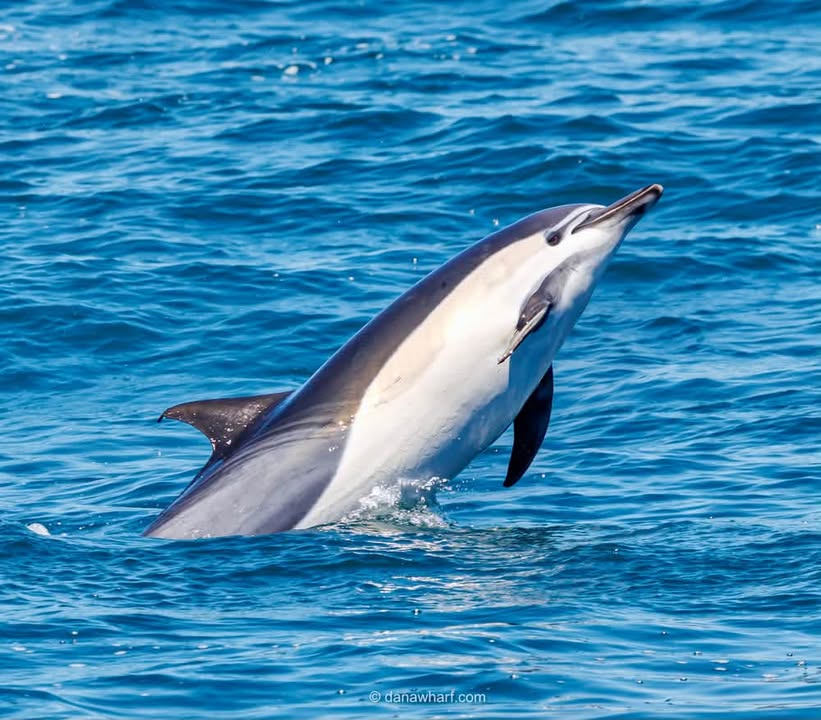
That matters for one simple reason. Whales are wild animals and no honest operator can promise one on a given trip. But between the year-round dolphin megapods, sea lions, and the whales themselves, the odds of seeing something spectacular out of Dana Point are about as high as ocean wildlife gets. Santa Barbara sees plenty of dolphins too, but the sheer density and daily reliability here is the reason Dana Point wears the trademarked title of Dolphin and Whale Watching Capital of the World.
Which One Has the Better Track Record?
Both destinations are Whale Heritage Sites, and that is worth respecting. But the timeline tells you something. Dana Point was named the first Whale Heritage Site in the Americas back in 2021, two years before the Santa Barbara Channel earned the same status. The local operators here also purchased the “Whale Watching Capital of the World” trademark in 2019 to put a stake in the ground. None of that summons whales by itself, but it reflects a community that has been organized around responsible whale watching, naturalist education, and ocean conservation longer than just about anywhere on this coast. If you want the backstory on how Dana Point earned that reputation, we wrote up the full story behind the Whale Capital of the World title.
There is also the simple matter of weather. Dana Point averages more than 275 days of sunshine a year and stays mild even in the dead of winter, which is a big part of why we can run trips essentially year-round instead of leaning on one short peak season.
So Which Should You Actually Book?
If you are already up in Santa Barbara or on the Central Coast for a trip, the Channel is a wonderful place to spend a morning on the water, and we would never talk you out of it. But if you are choosing where to go and you are anywhere in the Southern California population belt, from San Diego up through Orange County and into greater Los Angeles, Dana Point is the easier, more reliable, more complete day out. You get the same summer blue whales, the same winter grays, a much shorter run to reach them, the best dolphin watching on the planet, and a harbor town built around the whole experience.
It is also just easy to get to. Dana Point sits right off Interstate 5, roughly midway between San Diego and Los Angeles, so it is a short, direct drive for most of the region. If you are coming from the south, we broke down that trip in detail in our San Diego versus Dana Point comparison, and if you are already up in the OC, here is how Dana Point stacks up across Orange County. Want to launch a little farther north? Our sister operation runs the same style of trips out of Oceanside, halfway down toward San Diego.
Summer is prime time right now, with blue whales feeding just offshore, so if a blue whale is on your bucket list this is the window. You can see the current season and grab a spot on our Dana Point whale watching tours, and if you want to know exactly what July looks like out here, we laid it all out in our July whale watching guide. Either way, we will save you a spot on the rail.